

Featured Trip - Ghorepani Poon Hill Trek -
Explore More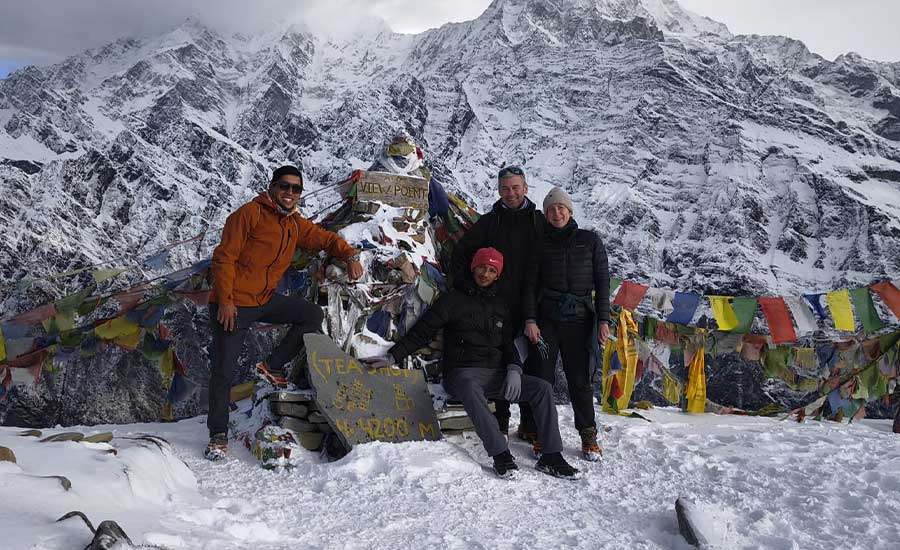
The Mardi Himal Base Camp Trek is one of Nepal's most rewarding short Himalayan adventures, offering spectacular mountain scenery, peaceful trails, authentic local culture, and comfortable teahouse accommodation. Located in the Annapurna region, this hidden gem takes trekkers through lush rhododendron forests, traditional Gurung villages, alpine meadows, and dramatic ridgelines with breathtaking views of Machhapuchhre (Fishtail), Annapurna South, Hiunchuli, Annapurna I, Dhaulagiri, and Manaslu.
Unlike the busier Everest Base Camp and Annapurna Circuit routes, the Mardi Himal Trek remains relatively quiet and uncrowded, allowing trekkers to enjoy a more peaceful and immersive Himalayan experience. The highlight of the journey is the early morning hike to Mardi Himal Viewpoint and optional Mardi Himal Base Camp (4,500 m), where panoramic sunrise views illuminate the snow-capped peaks of the Annapurna range.
This itinerary also includes the beautiful traditional villages of Lwang and Dhampus, providing opportunities to experience local culture, tea gardens, rural mountain life, and warm Nepalese hospitality. Combining stunning mountain landscapes, comfortable lodges, rich cultural encounters, and unforgettable Himalayan views, the Mardi Himal Base Camp Trek is an ideal choice for first-time trekkers, families, couples, and anyone seeking a short but complete trekking experience in Nepal.
| Day | Route / Activity | Altitude (m) | Meals | Accommodation | Walking / Transport |
|---|---|---|---|---|---|
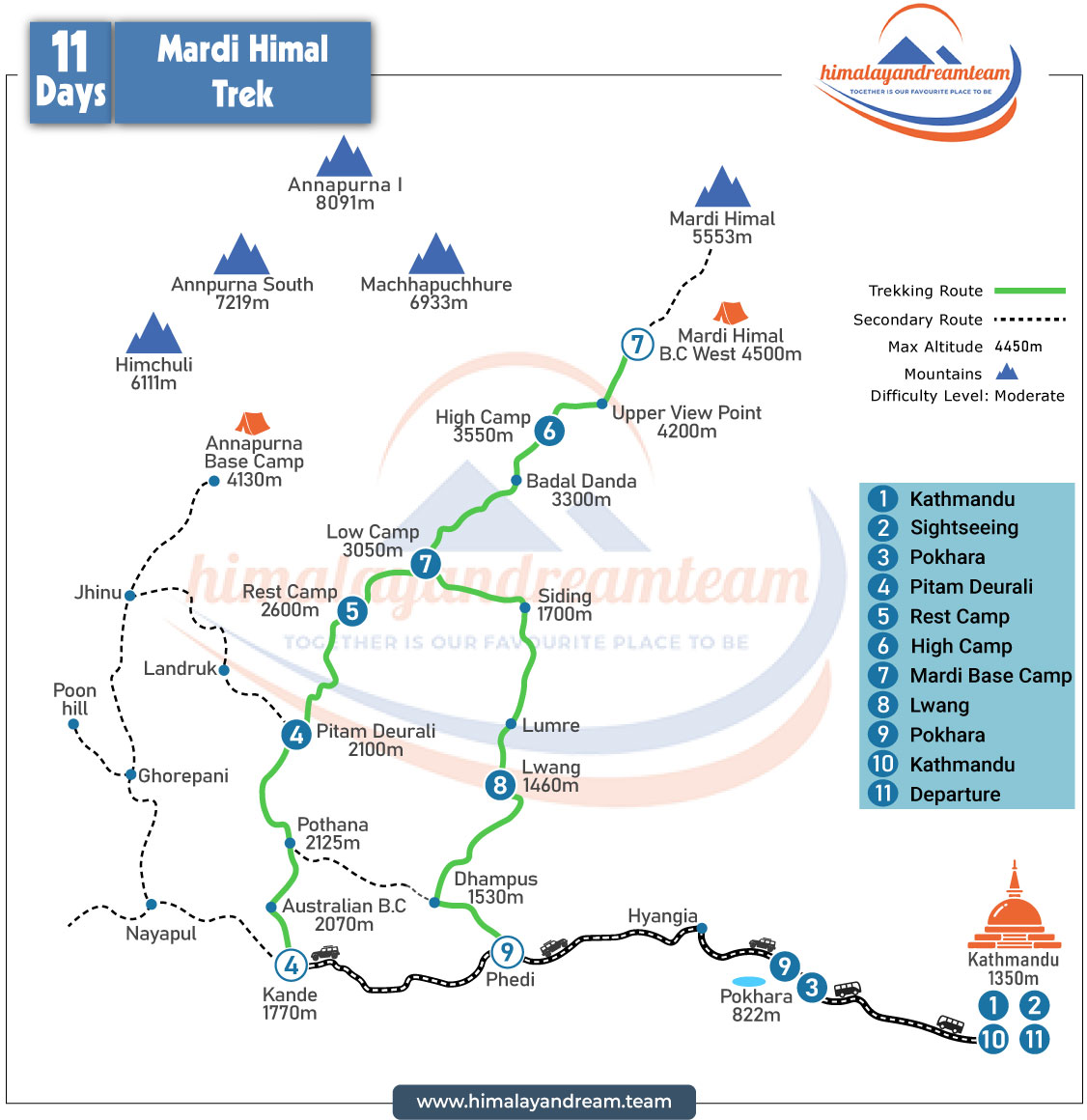
| 1 | Arrive Kathmandu (airport pick-up), hotel check-in & welcome dinner | 1335 | D | Hotel | — |
| 2 | Kathmandu UNESCO sightseeing & trek preparation | 1335 | B | Hotel | 4–5 hrs touring |
| 3 | Drive Kathmandu → Pokhara | 822 | B | Hotel | Drive 6–7 hrs |
| 4 | Drive Pokhara → Kande, trek to Pittam Deurali via Australian Camp & Pothana | 2100 | B/L/D | Lodge | Trek 4–5 hrs |
| 5 | Trek Pittam Deurali → Forest Camp → Rest Camp | 2600 | B/L/D | Lodge | Trek 5–6 hrs |
| 6 | Trek Rest Camp → Low Camp → Middle Camp → High Camp | 3550 | B/L/D | Lodge | Trek 4–5 hrs |
| 7 | Hike to Mardi Himal Viewpoint / optional Base Camp; descend to Low Camp | 4500 | B/L/D | Lodge | Trek 6–7 hrs |
| 8 | Trek Low Camp → Kalimati → Lwang Village | 1460 | B/L/D | Lodge | Trek 4–5 hrs |
| 9 | Trek Lwang → Dhampus → Phedi; drive to Pokhara | 1800 | B/L | Hotel | Trek 5–6 hrs + Drive 30 min |
| 10 | Drive Pokhara → Kathmandu (optional flight) | 1335 | B | Hotel | Drive 6–7 hrs / Fly 25 min |
| 11 | Transfer to International Airport for departure | — | B | — | Airport Transfer |
The Mardi Himal Base Camp Trek takes trekkers from the subtropical valleys of Pokhara (822 m) to the alpine wilderness of Mardi Himal Base Camp (4,500 m). This dramatic change in altitude means you’ll experience a variety of climates-from warm lowlands to crisp mountain air. Understanding the Mardi Himal weather and temperature helps you choose the right season, pack effectively, and enjoy every step of your Himalayan adventure.
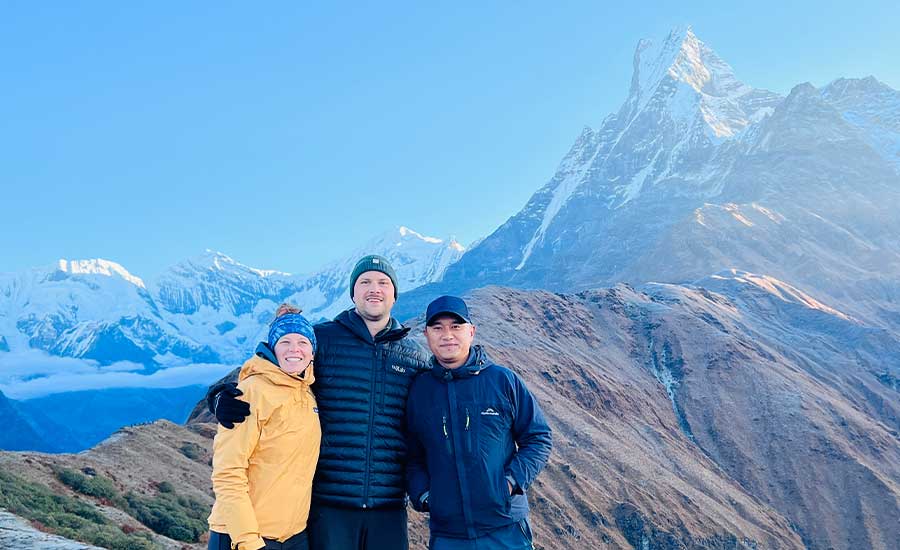
Spring is one of the best times to trek Mardi Himal. Days are comfortably warm, the skies are mostly clear, and the famous rhododendron forests burst into a rainbow of colors. The snow peaks of Annapurna and Machhapuchhre (Fishtail) gleam brightly under the blue sky, offering ideal conditions for photography.
Autumn is the most popular trekking season in Nepal, offering calm weather, moderate temperatures, and unmatched clarity. After the summer monsoon, the air becomes crystal clear, making this the best season for Mardi Himal Base Camp Trek.
Winter offers solitude and spectacular snow-capped landscapes for those prepared for the chill. The air remains crisp and the skies strikingly clear, rewarding trekkers with serene trails and peaceful mountain lodges.
The monsoon season in Nepal brings frequent rain and humidity, but also transforms the hills into a vivid green paradise. Though mountain views may be limited by clouds, this season offers a uniquely peaceful and authentic village experience.
| Location / Altitude | Daytime Temperature (°C) | Nighttime Temperature (°C) | Notes |
|---|---|---|---|
| Pokhara (822 m) | 20 – 30 | 15 – 20 | Warm and pleasant lakeside climate |
| Forest Camp (2,500 m) | 12 – 20 | 5 – 10 | Mild days and cool forest nights |
| Low Camp (3,050 m) | 10 – 18 | 2 – 6 | Fresh mountain air and emerging peak views |
| High Camp (3,550 m) | 5 – 12 | –2 – 3 | Cold mornings, perfect visibility for sunrise |
| Mardi Himal Base Camp (4,500 m) | 0 – 5 | –5 – 10 | Coldest section; strong winds and frosty nights |
No matter which season you choose, the Mardi Himal Trek promises awe-inspiring landscapes and an authentic Himalayan experience. For personalized advice on the best time to trek Mardi Himal or to book a tailor-made adventure, contact Himalayan Dream Team - your trusted local expert for safe and memorable trekking in Nepal.
| Season | Months | Weather & Mountain Views | Temperature | Crowd Level |
|---|---|---|---|---|
| Spring | March – May | Stable weather, blooming rhododendrons, and excellent mountain views | Day: 10–20°C Night: 0–5°C |
Medium to High |
| Autumn | September – November | Clear skies, dry trails, and the best Himalayan visibility | Day: 5–22°C Night: 0–8°C |
High |
| Winter | December – February | Clear mountain views with possible snow at higher elevations | Day: 0–15°C Night: -5 to -10°C |
Low |
| Monsoon | June – August | Lush green landscapes, frequent rain, and limited mountain views | Day: 5–25°C Night: 5–10°C |
Low |
| Mardi Himal Trek | Annapurna Base Camp Trek |
|---|---|
| Less crowded and more peaceful | More popular and busier trail |
| Shorter trek, ideal for limited time | Longer trek with more trekking days |
| Close-up views of Machhapuchhre | Closer to the Annapurna Sanctuary |
| Easier and more flexible itinerary | More physically demanding route |
Packing smartly is important for a comfortable and enjoyable Mardi Himal Base Camp Trek. The trail passes through warm forests, traditional mountain villages, and high alpine ridges, where temperatures can vary significantly. We recommend bringing lightweight clothing that can be layered according to the weather and altitude.
We provide a complimentary duffel bag for the trek.
Equipment Rental: Sleeping bags, down jackets, and trekking poles can be rented in Kathmandu before the trek begins. If you are missing any equipment, the Himalayan Dream Team will be happy to assist you with quality rental gear.
Note: The quantity of clothing can be adjusted according to the season. Trekkers visiting during winter (December–February) should pack warmer layers, gloves, and additional cold-weather clothing.
The Mardi Himal Base Camp Trek is considered a moderate trek in the Annapurna region of Nepal. It’s suitable for both beginners with good fitness and experienced trekkers looking for a short yet scenic Himalayan adventure. The trail combines gentle forest walks, ridge climbs, and gradual altitude gain, making it one of the most rewarding yet achievable treks in Nepal.
Walking Hours:
Trekkers typically walk 4 to 6 hours per day, depending on the stage of the journey. The path winds through rhododendron forests, stone steps, and alpine meadows, gradually leading up to the Mardi Himal Base Camp at 4,500 m.
Altitude Information:
The trek starts in Pokhara (822 m) and ascends steadily through Pitam Deurali (2,100 m), Low Camp (3,050 m), and High Camp (3,550 m) before reaching the base camp. The gradual altitude gain helps the body adapt naturally, and altitude sickness is rare if trekkers stay hydrated and pace themselves properly.
Fitness Requirements:
You don’t need to be a professional athlete, but a basic level of physical fitness is important. Regular walking, light jogging, or hiking for a few weeks before your trip will help you prepare. A positive mindset, endurance, and good trekking shoes are often more important than raw strength.
Is Mardi Himal Trek Hard?
Compared to longer routes like the Annapurna Circuit or Everest Base Camp Trek, Mardi Himal is easier and shorter, making it ideal for travelers with limited time or first-time trekkers. However, the final climb to the viewpoint or base camp is steep and can be challenging, especially in snow or wind.
In summary:
Mardi Himal Trek offers the perfect balance of moderate adventure, high-altitude experience, and accessible challenge, rewarding you with close-up views of Machhapuchhre (Fishtail), Annapurna South, and Hiunchuli without extreme difficulty.
To trek in the Annapurna region, you must obtain two official permits — the Annapurna Conservation Area Permit (ACAP) and the Trekkers’ Information Management System (TIMS) Card. These ensure conservation support and trekker safety. The Himalayan Dream Team will arrange both permits for you before your trek begins.
| Permit Type | Purpose | Cost (Foreign Nationals) | Cost (SAARC Nationals) | Where to Obtain | Documents Required |
|---|---|---|---|---|---|
| ACAP – Annapurna Conservation Area Permit | Supports conservation and local community development in the Annapurna region | NPR 3,000 (≈ USD 25) | NPR 1,000 | Nepal Tourism Board, Kathmandu or Pokhara | Passport copy and 2 passport-sized photos |
| TIMS Card – Trekkers’ Information Management System | Registers trekkers for safety, rescue, and official record | NPR 2,000 (Individual) / NPR 1,000 (Through Agency) | NPR 1,000 | Tourist Information Center, Kathmandu or Pokhara | Passport copy and 2 passport-sized photos |
Note: Keep printed copies of both permits with you during the trek. Checkpoints at Kande, Pothana, and Deurali will require verification. Himalayan Dream Team handles all necessary arrangements for a smooth and legal trekking experience.
Food and Accommodation on the Mardi Himal Trek
| Category | What to Expect |
|---|---|
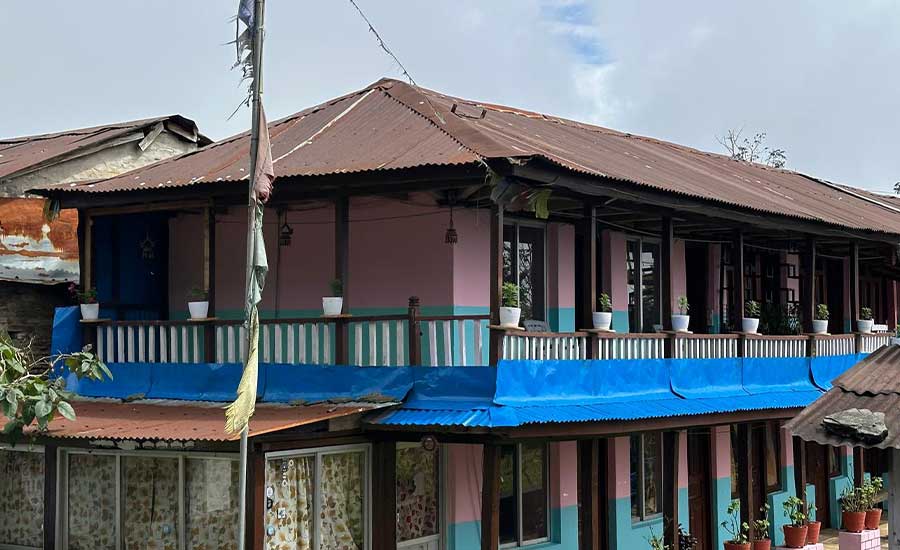
| Accommodation | Comfortable family-run teahouses and mountain lodges offering basic twin-sharing rooms along the trekking route. |
| Room Facilities | Simple beds with mattresses, pillows, and blankets. Shared bathrooms are common, especially at higher elevations. |
| Meals | Freshly prepared meals served daily, including breakfast, lunch, and dinner during the trek. |
| Popular Food | Dal Bhat, fried rice, noodles, soups, pasta, potatoes, pancakes, eggs, and seasonal vegetables. |
| Drinks | Tea, coffee, hot chocolate, soft drinks, bottled water, and boiled drinking water are available in most lodges. |
| Electricity & Charging | Charging facilities are available at most lodges, usually for an additional fee at higher camps. |
| Wi-Fi & Communication | Wi-Fi is available at some lodges for an extra charge, although connection quality varies by location. |
| Overall Experience | Simple but comfortable accommodation combined with warm local hospitality and spectacular Himalayan scenery. |
Arrival in Kathmandu and transfer to the hotel Welcome to Nepal! A Himalayan Dream Team representative will welcome you with a Nepali flower at Tribhuvan International Airport in Kathmandu and facilitate your private transfer to the hotel. You can relax and recover from your journey at the hotel and, when you feel ready, enjoy a gentle stroll around the neighborhood to get your first taste of the city. As an introduction to your journey, we would like to treat you to dinner at one of best restaurant, which is guaranteed to give you the best impression of authentic local cuisine and hospitality.
Following your breakfast at the hotel, your guide will take you on a full day exploration of the profound cultural and spiritual heritage of Kathmandu, taking you to multiple UNESCO world heritage sites.
Swayambhunath (Monkey Temple): You will start the day at this lofty Buddhist stupa resting on a hill with its eye catching views of the entire Kathmandu Valley. This site is one of the oldest by gaining importance as a relious center in Nepal where it is worshiped by Buddhists and Hindus.
Pashupatinath Temple: You will then proceed to Nepal’s most revered Hindu temple complex located on the banks of Bagmati River. Here, you will observe traditional cremation services and you will see sadhus (Hindu religious hermits) practicing their spirituality.
Kathmandu Durbar Square: You can take a walk at the serene old royal palace region of historic Kathmandu after lunch. This square is a living exposition of older temples and courtyards along with houses sculptured and wooden buildings in newari style architecture.
Local Markets Visit: To end the day, you can roam around kathmandu spice and vegetable markets which will allow you to experience the daily life of Kathmandan locals and provide opportunities for street photography.
This morning, we’ll start your journey to Pokhara from Kathmandu by tourist bus. The 3rd day drive is about 6-7 hours, so you will have plenty of time to enjoy the scenery. The hilly, winding, and terraced farmland is fabulous to see for all and there will even be opportunities to see the Himalaya mountains on nice days! You will drive by rivers, fields, and even some small and picturesque villages.
When you finally arrive to Pokhara (827 m), you will appreciate the peaceful ambiance the city and Fewa Lake provide. After you have checked into your hotel, you have the chance to relax and enjoy the area, or go for a walk around Lake Fewa, where you will find some shops, and a few cafes. Close to night time, you will have a meal while enjoying the wonderful view of the Machhapuchhre (Fishtail) and the Annapurna mountains.
After an early breakfast, we drive for about an hour to Kande (1,770m) the starting point of our trek.
After leaving Kande we will start the trek which will take about 3/4 hours. The trek will be wonderful as we will be surrounded by magnificent Rhododendron and oak forests. Finally we will reach Australian Camp which provides spectacular views of the Annapurna and Dhaulagiri mountain ranges.
We then follow a nice wooded trail to Pothana and then to Pittam Deurali (2,100 m). It is where we spend the first night in the mountains. We breathe fresh air, enjoy the wonderful views, and the tranquility is a perfect way to begin the adventure in the Himalayan region.
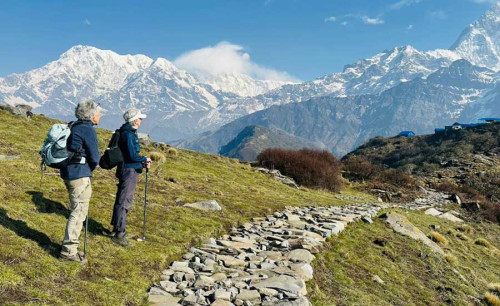
After breakfast, we begin our steady climb from Pitam Deurali through enchanting forests filled with rhododendron, oak, and maple trees. The trail gradually ascends along a quiet ridge with occasional clearings that open up to mesmerizing views of Annapurna South and Machhapuchhre (Fishtail Mountain). As we gain altitude, the air becomes cooler and crisper, and the scenery transforms from dense woodland to mossy highland forest.
We stop for lunch at Forest Camp before continuing the short uphill walk to Rest Camp (2,600 m), a peaceful spot nestled among the trees. From here, you can already catch your first unobstructed glimpse of the magnificent Machhapuchhre. The evening is spent relaxing in a local lodge, surrounded by the sounds of the forest.
Today’s trek offers one of the most rewarding days of the journey. The path climbs steadily through rhododendron and bamboo forests before emerging above the tree line, where panoramic Himalayan views unfold dramatically. We pass through Low Camp (3,050 m) and Middle Camp, enjoying breathtaking vistas of the Annapurna South, Hiunchuli, and Machhapuchhre peaks throughout the trail.
The final stretch to High Camp follows a ridge that reveals a vast open landscape, making you feel as if you’re walking on the spine of the Himalayas. Upon arrival at High Camp (3,550 m), you’ll be rewarded with awe-inspiring 360° mountain views, a perfect spot to watch the golden sunset over the Annapurna Range.
We start early in the morning for the most exciting and scenic part of the trek. The trail climbs gradually along a narrow ridge towards Mardi Himal Viewpoint (4,200 m), offering jaw-dropping sunrise views over Annapurna I, Dhaulagiri, Machhapuchhre, and Manaslu. For those with extra energy, an optional hike continues to Mardi Himal Base Camp (4,500 m), the highest point of the trek.
After enjoying the Himalayan panorama and taking unforgettable photos, we return to High Camp for breakfast. Then we continue descending to Low Camp (3,050 m), retracing our steps along the ridge. The lower altitude offers warmer air and a more relaxed atmosphere for the evening.
Today’s trek is a pleasant descent through dense forest and small traditional Gurung settlements. We’ll walk down to Kalimati and then to the picturesque Lwang village (1,460 m), known for its tea gardens and authentic homestay hospitality.
Lwang offers a perfect blend of cultural experience and natural beauty. You’ll have the opportunity to interact with local families, learn about their daily lifestyle, and enjoy fresh organic tea grown in the surrounding hills. In the evening, you can participate in a local cultural dance or relax amid serene mountain scenery.
After breakfast, we begin our final day of trekking with a pleasant walk through traditional Gurung villages, terraced farmlands, and beautiful forest trails. The route gradually ascends toward Dhampus, one of the most picturesque villages in the Annapurna region, renowned for its stunning mountain views and authentic rural atmosphere.
Upon reaching Dhampus, we take time to enjoy the spectacular panorama of Annapurna South, Machhapuchhre (Fishtail), Hiunchuli, and Lamjung Himal. The village offers a wonderful opportunity to experience local culture while admiring the impressive Himalayan backdrop.
After lunch in Dhampus, we continue with a gentle downhill walk to Phedi, passing through stone staircases, farmland, and traditional settlements. At Phedi, our vehicle will be waiting to transfer us back to Pokhara. Upon arrival, transfer to your hotel and enjoy the remainder of the day at leisure. You may relax by Phewa Lake, explore the vibrant Lakeside area, or simply celebrate the successful completion of your Mardi Himal adventure.
After breakfast, we start our journey back to Kathmandu riding a comfortable tourist bus (takes about 6-7 hours) along the Trishuli River Valley, where we get our last views of rural Nepal – of the lovely landscape, terraced farmland, and green hills.
Flying Back (25 minutes) - Optional
If you want to come back sooner, you can take a domestic flight to Kathmandu, which will also be the most picturesque part of the journey. You will get to see the mountains from above.
When you reach Kathmandu, we will take you to your hotel, where you will have the rest of the day to either rest or get some last-minute shopping done in Thamel. Overnight in Kathmandu.
After breakfast or lunch, depending on your flight time, we will transfer you to the international airport or if you leave by evening you can put your luggage at the Hotel and enjoy the city one final day.
If you're interested in extending your stay in Nepal, you might want to consider pre-booking a day's sightseeing tour in the Kathmandu Valley or a multi-day excursion to the wildlife reserve at Chitwan. For further information, please don't hesitate to reach out to our office.A
The Mardi Himal Base Camp Trek is considered a moderate trek suitable for beginners with a good level of fitness as well as experienced trekkers. Daily walking typically ranges from 4 to 7 hours, with the highest point reaching approximately 4,500 m at Mardi Himal Base Camp.
The trekking portion usually takes 5 to 7 days. This itinerary is a complete 11-day package that includes Kathmandu, Pokhara, transportation, accommodation, and guided trekking.
The best times are during the spring (March to May) and autumn (September to November) when the weather is clear and the views are spectacular.
It is considered a moderate trek. It's less strenuous than some other Himalayan treks, but still requires a good level of fitness due to its steep and rugged paths.
While not mandatory, hiring a guide can enhance your experience as they provide insight into the local culture, help with navigation and ensure safety.
The trek has basic teahouses and lodges along the route which provide essential services including meals and lodging.
Essential items include warm clothing, a sleeping bag, hiking boots, a first-aid kit, water purification tablets, and a map. Don’t forget a camera for the views!
Yes, as the trek reaches altitudes over 4,500 meters. It’s important to acclimatize properly and stay hydrated.
The trek usually starts at Kande or Phedi, which are accessible by road from Pokhara.
You need an Annapurna Conservation Area Permit (ACAP) and a Trekkers' Information Management System (TIMS) card.
Yes, it’s possible to trek solo, but joining a group or hiring a guide is advisable for safety and navigation.
The region is home to wildlife like Himalayan Thar, musk deer, and various bird species including the national bird of Nepal, the Danphe.
The trek offers a mix of lush rhododendron forests, rugged mountain paths, and panoramic views of snowy peaks.
Teahouses offer typical Nepali food such as dal bhat (rice and lentils) as well as some international dishes like pasta and pancakes.
Mobile connectivity is available in some parts, but it can be unreliable and weak as you climb higher. Carrying a local SIM card can help.
Enjoy the popular trekking and tour packages in Nepal Himalayas. 2026.





© 2011 - 2026 All rights reserved. Himalayan Dream Team
Sarah Thompson
16th October, 2025
The Mardi Himal Base Camp Trek was the highlight of our trip to Nepal. The trail was peaceful, scenic, and far less crowded than we expected. Every day brought incredible views of Machhapuchhre, Annapurna South, and Hiunchuli. Our guide was professional, friendly, and always made sure we were comfortable. Reaching Mardi Himal Base Camp at sunrise was an unforgettable experience. Himalayan Dream Team organized everything perfectly, and we would not hesitate to recommend them.
Michael Carter
16th November, 2024
As first-time trekkers in Nepal, we wanted a route with amazing mountain scenery but without the crowds. Mardi Himal was exactly what we were looking for. The forests, traditional villages, and panoramic ridges were stunning. The itinerary was well-paced, and the support from Himalayan Dream Team was outstanding from arrival to departure. Standing face-to-face with Machhapuchhre was one of the most memorable moments of our lives.